
Biographical notes
He was born in Havana, Cuba, in 1961 and has lived and worked in Barcelona since 1966, practically his entire life.
He studied Sculpture Techniques at the Llotja School of Design and Art in Barcelona. During the following years, he combined his work as a sculptor with that of a graphic designer.
He has worked with different materials throughout his career (iron, polyester resins with fibreglass, cast iron), although for some years now, wood has been his preferred raw material. He moves between geometric abstraction and some of the more organic aspects that wood provides.

Fotografía: Faustí Llucià
Entrevista a Pablo Leonardo Martínez
Preguntas formuladas por el equipo de la galería The Americas Collection.
Marzo de 2026.
Preguntas formuladas por el equipo de la galería The Americas Collection.
Marzo de 2026.
¿Cómo te definirías como artista en tres palabras y por qué?
Soy un artista que siempre me he movido en el campo de la abstracción, a veces geométrica, otras veces más sintética y orgánica, intentando mantener un equilibrio entre la expansión y la contención en mi trabajo, desde un punto de vista muy personal.
¿En qué momento entendiste que el arte no era solo algo que hacías, sino parte de quién eres?
Creo que lo entendí cuando me di cuenta de que no podía dejar de pensar en formas. En algunos momentos imaginaba variantes de las esculturas que estaba haciendo y también de otras que nunca desarrollé, o dibujaba un esbozo y luego surgían diferentes variantes de esas formas. Entonces, se convirtió para mí en un proceso muy agradable que me mantenía alejado de la realidad.
¿Qué parte de tu personalidad se refleja con más fuerza en tu obra?
Creo que la paciencia, la búsqueda del equilibrio y poder saber que algo está terminado.
Cuando comienzas una nueva pieza, ¿partes de una idea clara o permites que la obra se revele en el proceso?
Normalmente, trabajo series de esculturas que definen un camino. Lo primero que pienso es en el formato, ya que necesito una premisa inicial, un punto de partida para situar la escultura en un espacio real; a partir de ahí la obra se va desarrollando.
¿Qué papel juega la intuición en tu manera de crear?
En ese punto en que la obra se va desarrollando, ahí es donde interviene la intuición: descubrir pasos que descartan otros pasos sin saber por qué, encontrar el hilo en esa partitura visual que se va creando.
¿Cómo es tu proceso creativo desde el primer impulso hasta la obra terminada?
Inicialmente, estoy rodeado por los materiales con los que voy a trabajar. Muchas veces son inicios de formas y repeticiones parecidas, pero que varían levemente: signos, símbolos, a veces ideas con las que puedo relacionarlo todo.
Luego comienzo a unir y a añadir para crear la forma que se va descubriendo paso a paso. Al final hay un punto en el que la pieza está terminada, a veces con la duda de si continuarla, saber contenerme, ser sobrio. Si continuase la obra, sería otro artista, con otro resultado.
¿Qué te atrae del material que utilizas y qué te permite expresar?
Utilizó básicamente la madera y a veces elementos de hierro fundido. En la madera me interesa su textura, sus tonalidades, su dureza, que me permite trabajarla buscando la vibración de las superficies, a veces su brillo en las superficies superpulidas, otras veces los pequeños brillos intermitentes que se generan en las superficies raspadas.
También trabajó superficies pintadas de blanco y luego lijadas para mostrar la madera que se encuentra debajo. En todos los casos se convierte en un trabajo lento con la repetición de movimientos donde se transmite la energía de mis manos y de mi intención en la materia.
¿Cómo trabajas el equilibrio entre estructura, forma y vacío en tus esculturas?
Aquí interviene mucho la intuición: detenerme mucho en los pasos intermedios de la obra, dejarla descansar para mirarla al día siguiente y continuar, a veces desmontarla y seguir otro camino, o abandonar la obra para otro momento.
Ten en cuenta que no trabajo con un plan establecido, excepto cuando la pieza está bastante avanzada y ya puedo ir imaginando los siguientes pasos.
¿En qué momento sabes que una obra está terminada?
Hay un momento en que lo sé; eso no significa que no pudiera continuarla y convertirla en una obra mucho más compleja. Antes he comentado que prefiero contenerme en lugar de pasarme; es un momento de respiro y de tranquilidad, pero no quiero confundir a nadie; yo no trabajo sufriendo, para mí ese proceso es agradable.
¿Qué emociones o estados internos estás explorando en tu trabajo actual?
Creo que la emoción siempre es la misma, una posición de búsqueda constante, pero despacio, sin prisa. Siempre estoy pensando en armonía, belleza y amor; soy bastante lineal en eso.
La exploración va variando de una serie a otra; a veces estoy buscando el movimiento en la obra, otras veces posiciones más estáticas.
Este último mes estoy trabajando a partir de unos módulos de madera pintada y lijada en forma de L, que utilizo para componer entre ellos algo parecido a lo que hacían los dadaístas con sus palabras recortadas, aunque el azar en mi caso es un proceso controlado y dirigido, quizás en todos los casos.
Ya he trabajado así antes y seguramente otros muchos artistas.
¿Creas pensando en el espectador o es un proceso completamente personal?
La verdad es que no, voy trabajando una escultura detrás de otra y saltando de una serie a otra según me apetece. Otra cosa diferente es pensar en un encargo y en que una escultura tenga que encajar en un espacio y que pueda formar parte de las series en las que trabajo. En ese caso me sitúo en el lugar del espectador, es decir, del cliente.
¿Qué te permite expresar el arte que no puedes decir con palabras?
Con la escultura puedo modificar los espacios, puedo aportar belleza y armonía a las personas que conviven con mis obras, que las puedan tocar, mover. Es una intención personal y creo que sucede así.
¿Qué has descubierto sobre ti mismo a través de tu obra?
Eso ha ido cambiando a través del tiempo, pero finalmente, descubrir la paciencia en mí mismo, establecer un ritmo vital y saber que el tiempo no es un enemigo. Optimismo.
¿Qué te impulsa hoy a seguir creando?
El placer de enfrentarme a lo nuevo, una y otra vez. Saber que no estaba equivocado cuando era niño, que quería ser artista y poder expresarme hasta el último día de mi actividad artística.
Interview with Pablo Leonardo Martínez
Questions posed by the artistic team at The Americas Collection gallery.
March 2026.
Questions posed by the artistic team at The Americas Collection gallery.
March 2026.
· How would you define yourself as an artist in three words, and why?
I am an artist who has always worked in the field of abstraction—sometimes geometric, other times more synthetic and organic—trying to maintain a balance between expansion and restraint in my work, from a very personal perspective.
· At what point did you realize that art wasn’t just something you did, but part of who you are?
I think I realized it when I realized I couldn’t stop thinking about shapes. At times I would imagine variations of the sculptures I was making and also of others I never developed, or I would draw a sketch and then different variations of those forms would emerge. So, it became a very enjoyable process for me that kept me detached from reality.
· What aspect of your personality is most strongly reflected in your work?
I think it’s patience, the search for balance, and knowing when something is finished.
· When you start a new piece, do you begin with a clear idea, or do you let the work reveal itself during the process?
I usually work on a series of sculptures that define a path. The first thing I think about is the format, since I need an initial premise, a starting point to situate the sculpture in a real space; from there, the work develops.
· What role does intuition play in your creative process?
It is at that point, as the work unfolds, that intuition comes into play: discovering steps that rule out others without knowing why and finding the thread in that visual score that is taking shape.
· What is your creative process like, from the initial impulse to the finished work?
Initially, I’m surrounded by the materials I’m going to work with. Often they’re the beginnings of shapes and similar repetitions that vary slightly: signs, symbols, and sometimes ideas I can connect everything to.
Then I begin to piece things together and add elements to create a form that gradually reveals itself. Eventually, there comes a point where the piece is finished, and I’m sometimes left wondering whether to continue it—knowing when to stop, to exercise restraint. If I were to continue the work, it would be by a different artist, with a different result.
· What attracts you to the materials you use, and what do they allow you to express?
I primarily use wood and occasionally cast iron elements. With wood, I’m drawn to its texture, its tones, and its hardness, which allows me to work with it by seeking the vibration of the surfaces—sometimes the shine on highly polished surfaces, other times the small, intermittent glints created on scraped surfaces.
I also work with surfaces painted white and then sanded down to reveal the wood beneath. In all cases, it becomes a slow process involving repetitive movements through which the energy of my hands and my intention are transmitted into the material.
· How do you work with the balance between structure, form, and void in your sculptures?
Intuition plays a big role here: pausing a lot during the intermediate stages of the work, letting it rest so I can look at it the next day and continue, sometimes dismantling it and taking a different path, or setting the work aside for another time.
Keep in mind that I don’t work with a set plan, except when the piece is quite far along and I can already begin to imagine the next steps.
· At what point do you know a work is finished?
There comes a moment when I know; that doesn’t mean I couldn’t continue it and turn it into a much more complex piece. I mentioned earlier that I prefer to hold back rather than go overboard; it’s a moment of respite and calm, but I don’t want to mislead anyone—I don’t work in suffering; for me, that process is enjoyable.
· What emotions or inner states are you exploring in your current work?
I think the emotion is always the same—a state of constant searching, but slowly, without haste. I’m always thinking about harmony, beauty, and love; I’m quite straightforward in that regard.
The exploration varies from one series to another; sometimes I’m looking for movement in the work, other times for more static compositions.
This past month I’ve been working with L-shaped modules made of painted and sanded wood, which I use to compose arrangements, something similar to what the Dadaists did with their cut-up words, although in my case chance is a controlled and directed process—perhaps in all cases.
I’ve worked this way before, and surely many other artists have as well.
· Do you create with the viewer in mind, or is it a completely personal process?
Actually, no. I work on one sculpture after another, jumping from one series to another as I please. It’s a different matter when I’m working on a commission and a sculpture has to fit into a specific space and be part of the series I’m working on. In that case, I put myself in the viewer’s shoes—that is, the client’s.
· What does art allow you to express that you cannot put into words?
With sculpture, I can transform spaces; I can bring beauty and harmony to the people who live with my works, who can touch them and move them. It’s a personal intention, and I believe that’s how it happens.
· What have you discovered about yourself through your work?
That has changed over time, but ultimately, discovering patience within myself, establishing a rhythm of life, and knowing that time is not an enemy. Optimism.
· What drives you today to keep creating?
The pleasure of facing the new, time and time again. Knowing that I wasn’t wrong when I was a child—that I wanted to be an artist—and being able to express myself until the very last day of my artistic career.
What I thought about art in 1988...
I've been looking for a while in my boxes of photos and material from the 80s for a short text that I wrote, a definition of what I understood by art at that time and that I still think about now. I'll include it on this page so you know what I thought at the time. It is an unpretentious text, in one of those moments when you stop with the need to express yourself and define the reason for what you do:
"I conceive art as a mental projection of that of ourselves which, unknown and random as it is, has no prior planning, and which we store in a state of harmonic disorder.
This stored information is formed by images and sensations, fed by our vital learning and also by unconscious memories that are part of the universal genetic memory.
Art is the constant transformation of magical knowledge into a concrete expression, catalyzed through the artist, who provides the exclusive vision of his attempt to understand reality."
Pablo Leonardo Martínez:
•••
Lo que pensaba en 1988 sobre el arte...
Llevo un tiempo buscando en mis cajas de fotos y de material de los 80′s un texto corto que escribí, una definición de lo que yo entendía por arte en aquel momento y que todavía pienso ahora. Lo voy a incluir en esta página para que sepas lo que pensé y lo que pienso. Es un texto sin pretensión, en uno de esos momentos en los que te detienes con la necesidad de expresarte y definir el porqué de lo que haces:
“Concibo el arte como una proyección mental de aquello de nosotros mismos que, por desconocido y azaroso, no tiene una planificación previa, y que almacenamos en estado de desorden armónico.
Esta información almacenada está formada por imágenes y sensaciones, alimentada por nuestro aprendizaje vital y también por recuerdos inconscientes que forman parte de la memoria genética universal.
El arte es transformación constante del conocimiento mágico en una expresión concreta, catalizada a través del artista, que aporta la exclusiva visión de su intento por comprender la realidad”.
Pablo Leonardo Martínez
Where you can find my work
Bluerider Art (Taipei, Taiwan)
East West Space (Barcelona, Spain)
The americas collection (Miami, USA)
https://americascollection.com
Siesta arte y objetos (Barcelona, Spain)
https://www.instagram.com/siesta_art_i_objectes/
Amagats (Barcelona, Spain)
Exhibitions
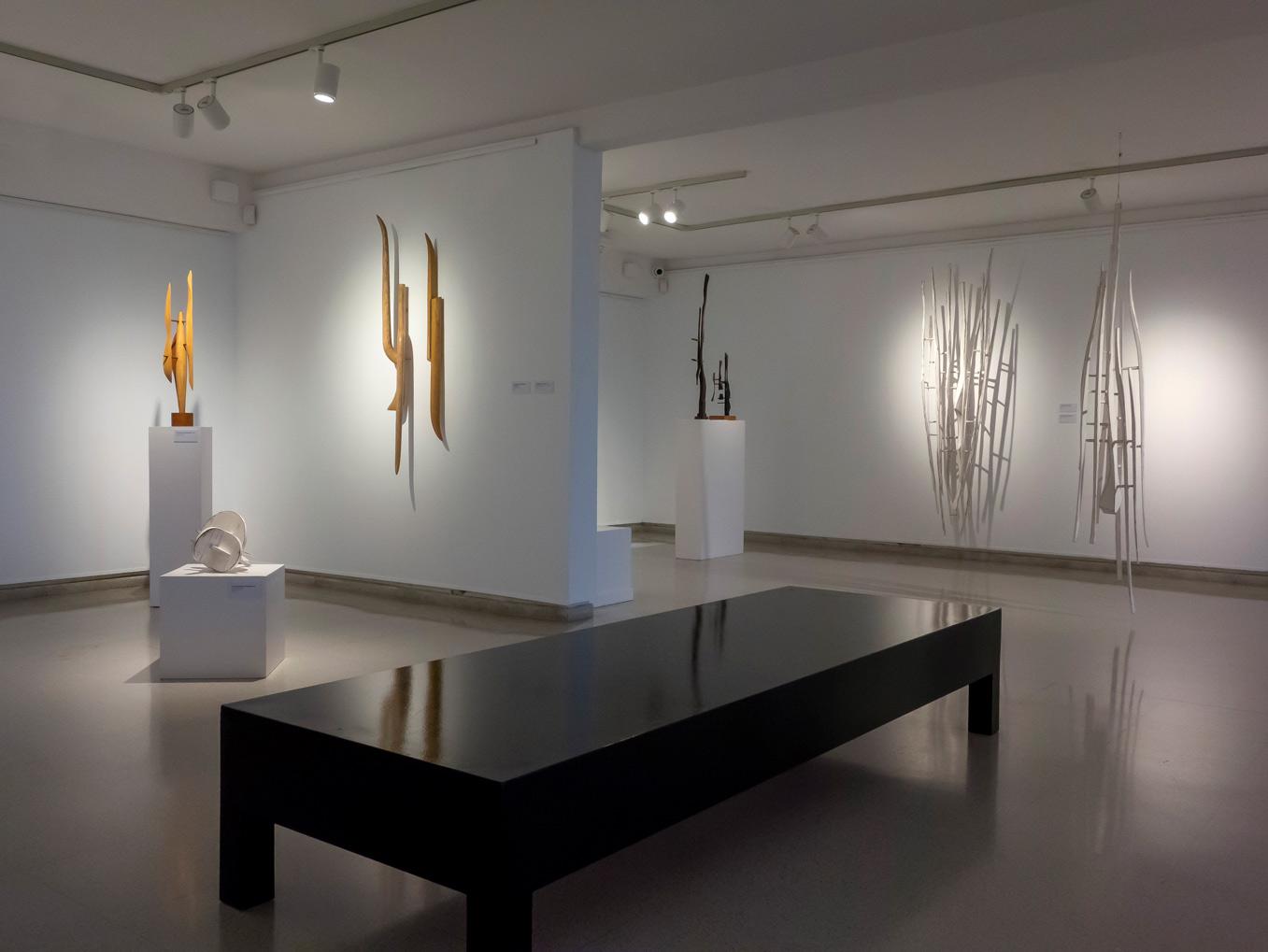
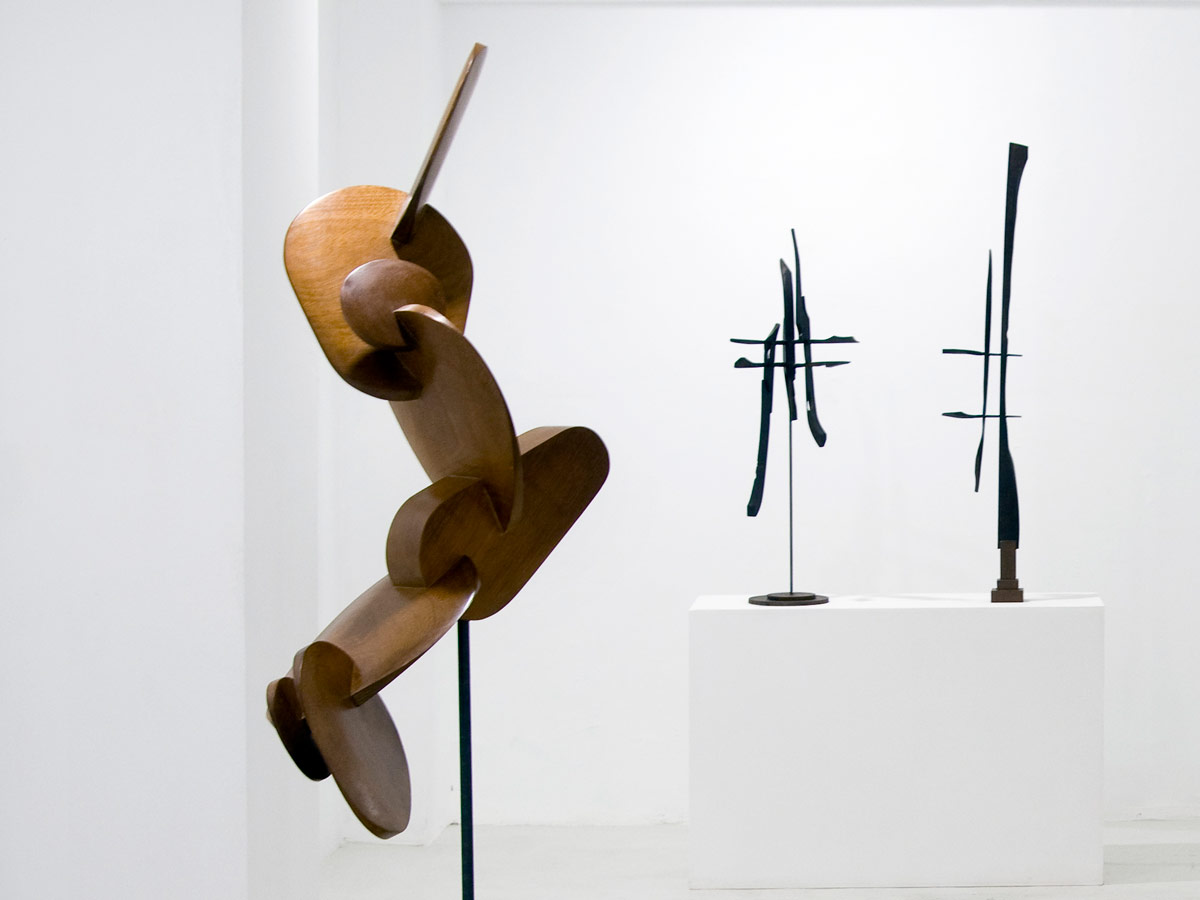
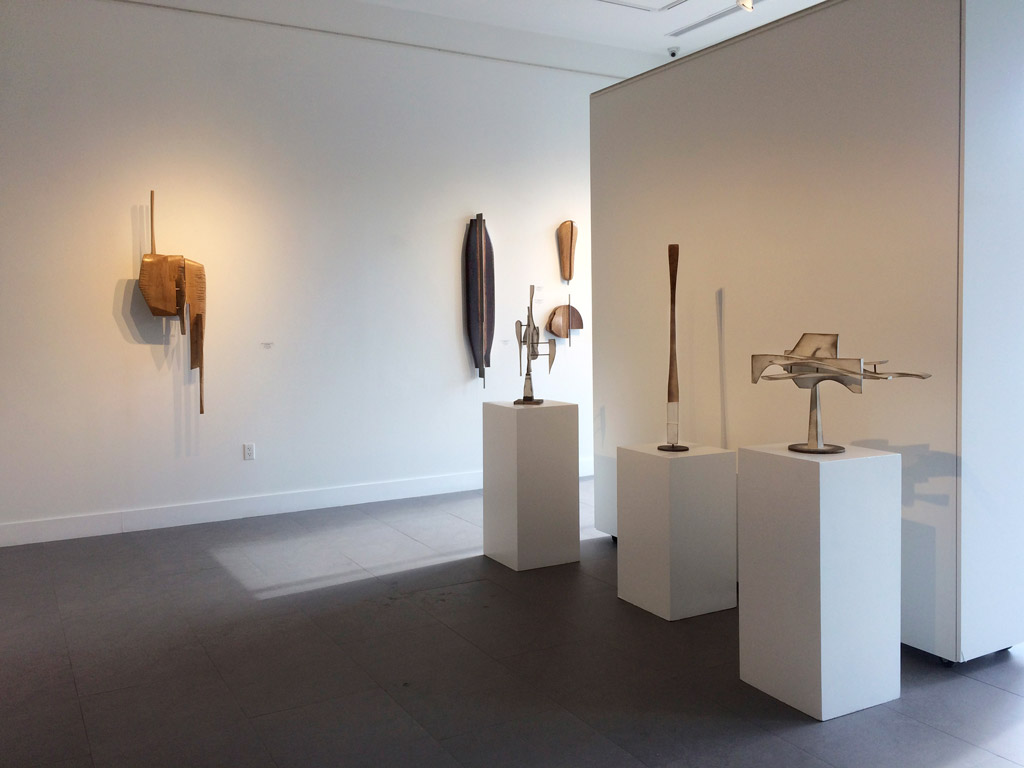
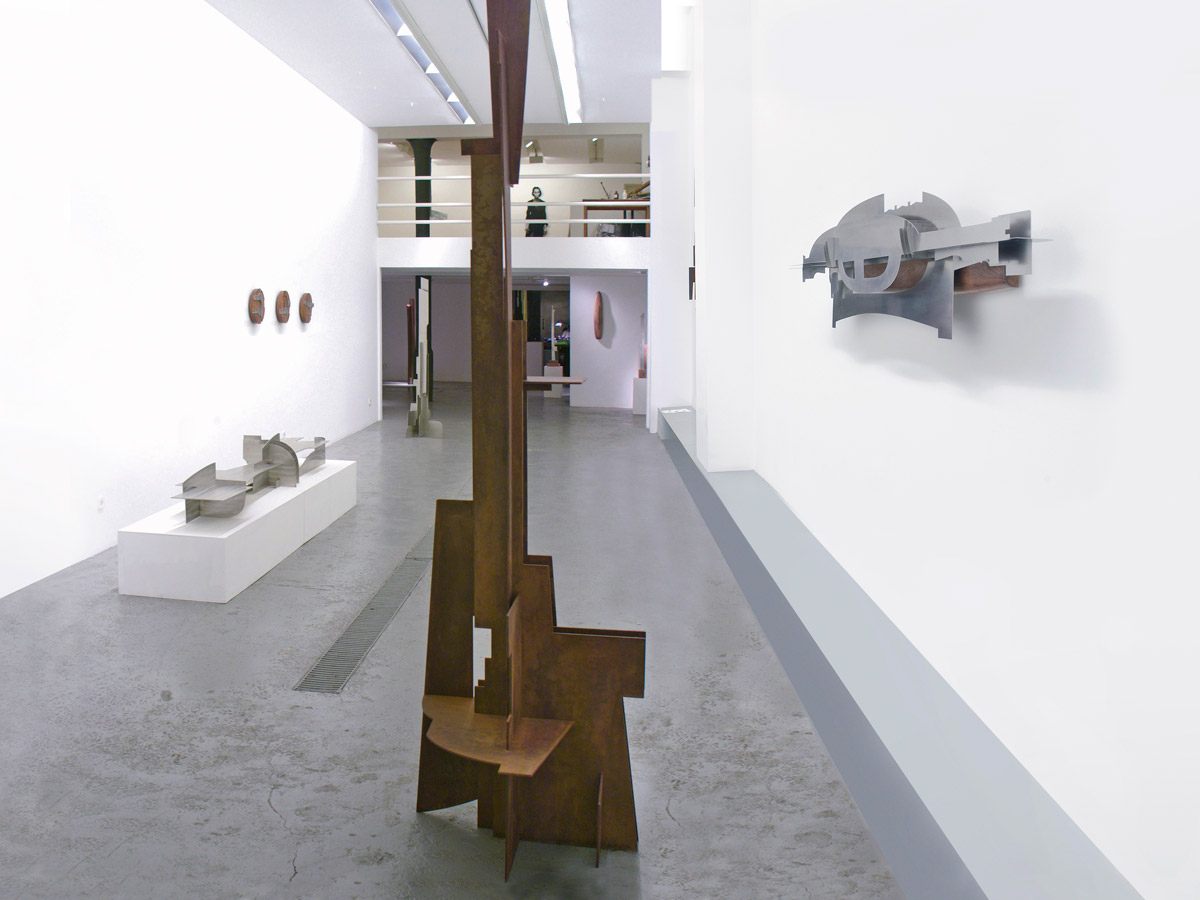
Exposición "Estructures i composicions poètiques" en el Museo Enric Monjo. 2023-2024
Curriculum
Solo exhibitions
Cerca de l’ordre Harmoníc. La Cuina D’Amagats.(Barcelona)
Pequeños formatos (2000–2025) Siesta – Gracià. 2025
«Estructures i composicions poètiques». Museu Enric Monjo, Vilassar de Mar, Barcelona. 2023
Creative constructions. The Americas Collection (Miami, USA). 2022
Conversaciones espaciales. Art Enllà (Barcelona, España). 2021
Tránsitos. Colección de las Américas (Miami, EE. UU.). 2018
La distancia más corta. El Museo Cubano (Miami, EE.UU.). 2013
“Tótem”. Galería Esther Montoriol (Barcelona, España). 2006
Galería Safia. Esculturas (Barcelona, España). 1996
Galería Subex. Pinturas y esculturas (Barcelona, España). 1986
Dibujos. Galeria Amagatotis (Barcelona).1984
Group exhibitions
DelicARTessen 25. Galeria Esther Montoriol (Barcelona, España). 2025
WALLPAPER. Arts Club Bcn (Barcelona, España). 2025
Resonances. Masmir estudio, EAST WEST (Barcelona, España). 2025
«FANG YUAN» Aesthetic Exhibition | EAST WEST 1st Anniversary | Barcelona. 2025
DelicARTessen 24. Galeria Esther Montoriol (Barcelona, España). 2024
DelicARTessen 23. Galeria Esther Montoriol (Barcelona, España). 2023
ARA. 6a Galeria d’Art. (Palma de Mallorca, España). 2023
DelicARTessen 21. Galeria Esther Montoriol (Barcelona, España). 2022
HAIKUS. Art Enllà. (Barcelona, España). 2022
Autumn 22. Bluerider ART Gallery (Taipei, Taiwan). 2022
ART TAIPEI 2022. Bluerider ART Gallery. 2022
IN_FINITO / IN_FINIT. Taller 131. Barcelona. 2022
Dos-cents seixanta-dos mil cinc-cents centímetres de pintura. Art Enllà. (Barcelona, España). 2022
Colectiva de Julio. The Americas Collection (Miami, USA). 2022
6aSIS. 6a Galeria d’Art. (Palma de Mallorca, España). 2022
2021 Gallery night. The Americas Collection (Miami, USA). 2021
Art Enllà. Compact Art Collection (Barcelona, España). 2021
Momentum, 20 años. Galeria Esther Montoriol (Barcelona, España). 2020
La Destilería. BLANC WHITE WEIS BLANCO (Mataró, España). 2021
Port Gallery Barcelona (Barcelona, España). 2020
DelicARTessen 18. Galeria Esther Montoriol (Barcelona, España). 2020
Art Enllà, Navidad (Barcelona, España). 2020
DelicARTessen 18. Galeria Esther Montoriol (Barcelona, España). 2019
NOW! 6a Galeria d’Art. (Palma de Mallorca, España). 2019
Ars natura / Espacio de arte. Obra reciente. (Palau Saverdera, Girona, España). 2019
XS/ Un format íntim. 6a. Galeria d’Art. (Palma de Mallorca, España). 2019
FLYING HEADS. Museo de Cádiz. (Cadiz, España). 2018
URBANA 3D. Hotel Eurostars Torre Sevilla. (Sevilla, España). 2018
ÉS/CULTURA (I). 6a. Galeria d’Art. (Palma de Mallorca, España). 2018
Otherthings. Centre d’Estudis Australians i Transnacionals (CEAT) de la Universitat de Barcelona (Barcelona, España). 2018
Viladecans Art al Comerç, Torre del Baró (Barcelona, España). 2018
NUEVOS NÓMADAS IV, Granada. MECA Mediterráneo Centro Artístico. (Granada, España). 2017
DelicARTessen 16. Galeria Esther Montoriol (Barcelona, España). 2017
ABSTRACCIONS. 6a Galeria d’Art. (Palma de Mallorca, España). 2016
The Americas Collection (Miami, USA). 2016
DelicARTessen 15. Exposición colectiva. Galeria Esther Montoriol (Barcelona, España). 2016
Cartografies Paral·leles. Context Galeria. (Sant Cugat del Vallès, Barcelona, España). 2015
Playroom. Galeria Esther Montoriol (Barcelona, España). 2015
The Americas Collection (Miami, USA). 2015
Sala Perill. Exposición colectiva de Joyeria. Artista invitado. (Barcelona, España). 2015
The Americas Collection (Miami, USA). 2014
PAD London 2014 con Karry Gallery (París, Francia). 2014
DelicARTessen 13. Galeria Esther Montoriol (Barcelona, España). 2014
Spectrum Miami 2013. Con The Americas Collection (Miami, USA). 2013
Artful Treasures with Tiffany & Co. and Americas Collection (Miami, USA) 2013
Pinta NY 2013. The Americas Collection (New York, USA). 2013
DelicARTessen 12. Galeria Esther Montoriol (Barcelona, España). 2013
Espai G d’Art. (Terrassa, España). 2013
EXPO JAZZ’12 TERRASSA. Espai G d’Art. (Terrassa, España). 2012
NADAL 2011. Espai G d’Art. (Terrassa, España). 2011
DelicARTessen 10. Galeria Esther Montoriol (Barcelona, España). 2011
DelicARTessen 9.Galeria Esther Montoriol (Barcelona, España). 2009
Escultura para los premios de “La Unió Patronal Metalúrgica” (Barcelona, España). 2009
Seleccionado en el “II Premi d’Escultura Contemporània”. Fundació Vilacasas. Can Mario. (Palafrugell, España). 2007
Rompecabezas. Galeria Esther Montoriol (Barcelona, España). 2006
“Carte blanche à Carles Valverde”. Espace Saint-François (Lausanne, Suiza). 2004
DelicARTessen 3. Galeria Esther Montoriol (Barcelona, España). 2004
Escultura conmemorativa del 125 aniversario de la telefonía en Barcelona, Cataluña y España. Universitat Pompeu Fabra (Barcelona, España). 2003
Ficciones fotográficas. Arco de Santa María (Burgos, España). 2003
Ficciones. Galeria Esther Montoriol (Barcelona, España). 2002
Hora Zero. Galeria Esther Montoriol (Barcelona, España). 2001
Premio de escultura Andrea Serrano (finalista)
Exposiciones colectivas de los seleccionados organizadas por la Fundación Andrea Serrano: Art Fair Sollentune (Estocolmo), Bulowska Galleriet (Malmö, Suécia), Theseus (Barcelona), Art Ginesta (Sitges), Art Expo (NY, USA), Neil Yperifanos (NY, USA). 1988
3 Escultura. Galería Mestre Paco (Pollença, Mallorca). 1987